


Winterizing Your Boat Head to Avoid a Springtime Disaster
, by Marc Buccat, 10 min reading time
, by Marc Buccat, 10 min reading time
Avoid a spring disaster! Learn to winterize boat holding tank systems properly & prevent costly freeze damage with our guide.
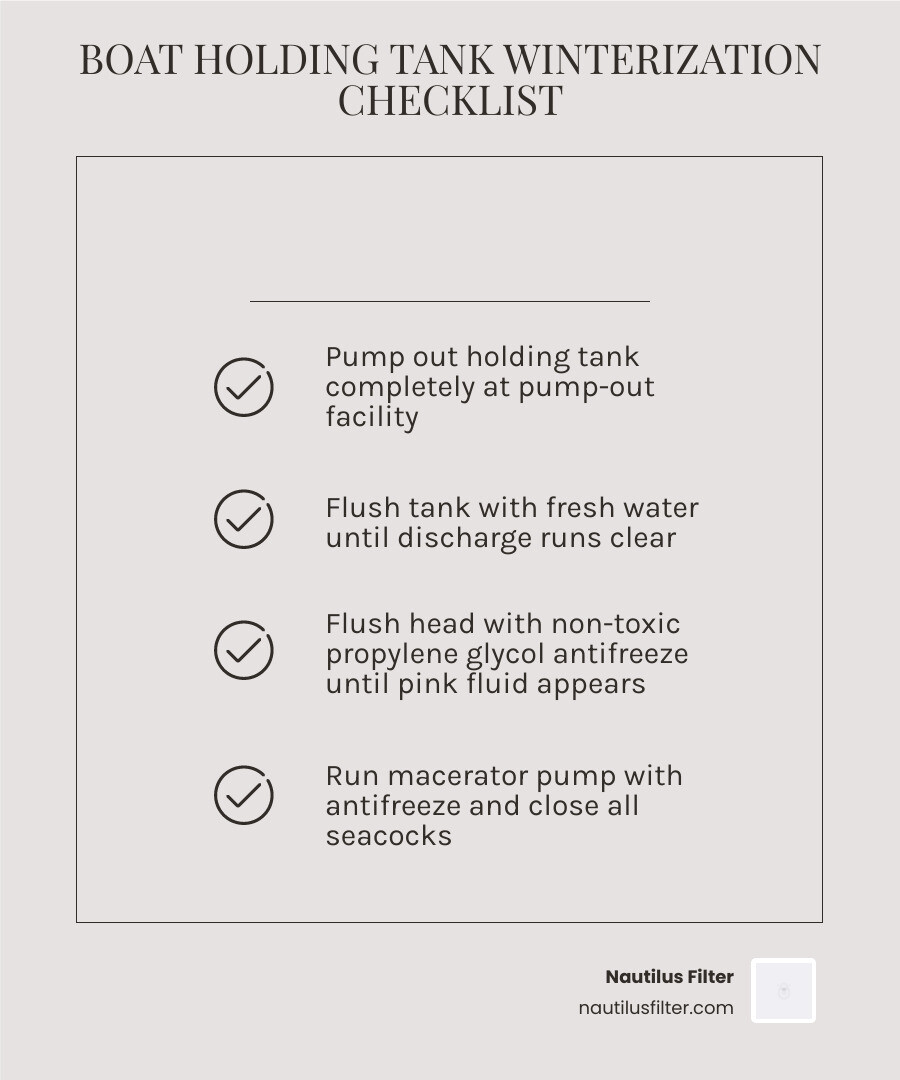
Winterize boat holding tank systems before your first hard freeze — or risk cracked hoses, a failed pump, and a very expensive spring. Here's the short version of what to do:
Quick steps to winterize your boat's holding tank:
Water expands by about 9% when it freezes. That expansion pushes outward with tens of thousands of pounds per square inch — enough to crack a holding tank, split a sanitation hose, or destroy a pump. According to BoatU.S. Marine Insurance data compiled over ten years, more than three-quarters of freeze damage claims involved components that simply had water left inside them.
The holding tank and sanitation system are some of the most overlooked parts of the winterization process. Most boaters remember the engine. Far fewer remember the macerator lines.
This guide walks you through the full process — from flushing and cleaning the tank to protecting every pump, hose, and fitting in your sanitation system.
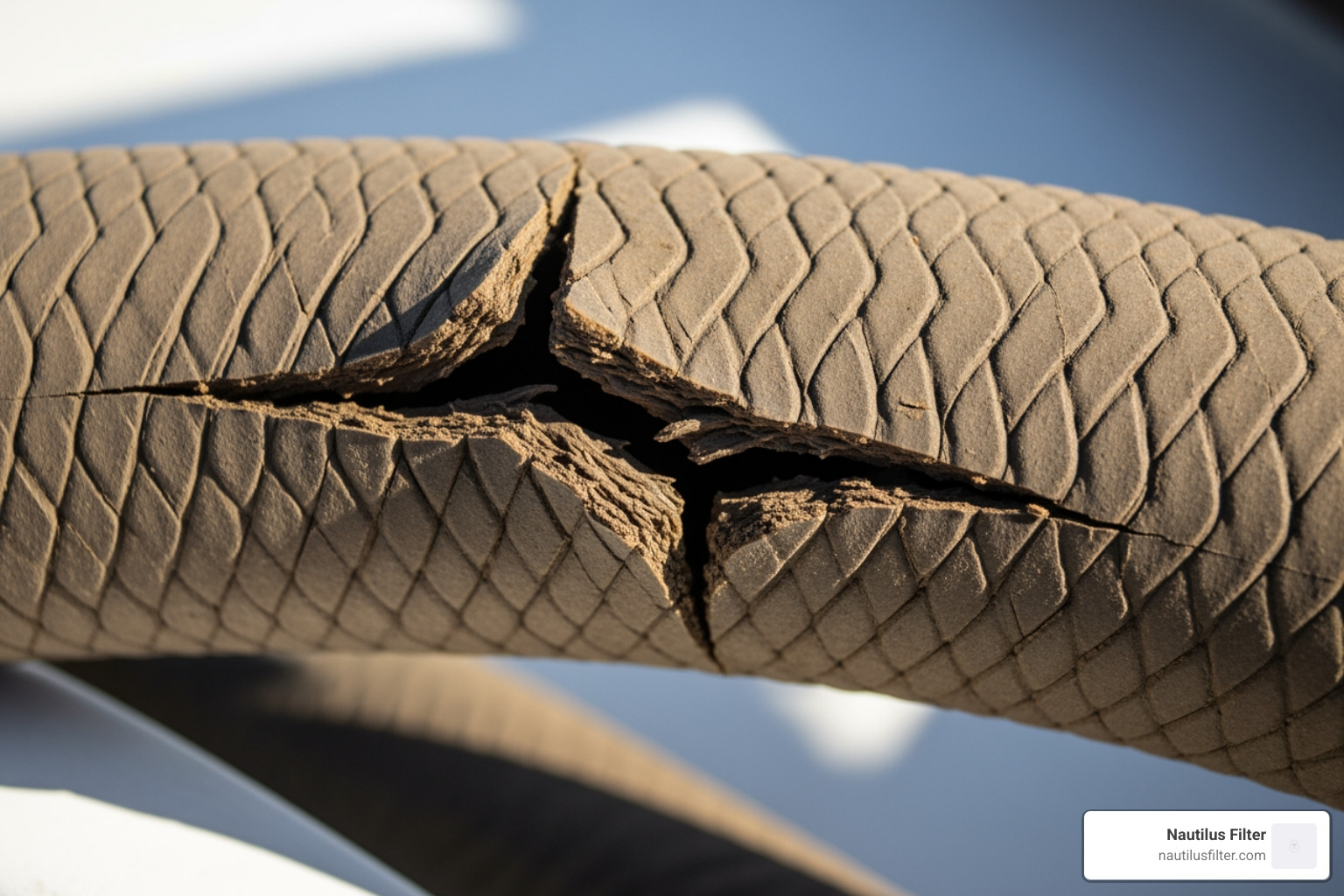
In the Pacific Northwest, from the marinas of Anacortes to the docks of Vancouver, we often experience "micro-climates" where temperatures can plummet overnight. While the salt water around your hull might stay liquid, the fresh or brackish water trapped inside your sanitation plumbing is a ticking time bomb.
When water freezes, it doesn't just turn into a harmless ice cube; it expands with a force of tens of thousands of pounds per square inch (PSI). This is enough force to split a heavy-duty reinforced sanitation hose or crack a rigid polyethylene holding tank. If you’ve ever seen the "chocolate milk" on an engine dipstick from a cracked block, you know the feeling of a preventable disaster. In the sanitation system, a freeze failure usually results in a bilge full of effluent once things thaw out in the spring—a literal "stink bomb" that can ruin your interior fabrics and woodwork.
The BoatUS Boater's Guide to Winterizing notes that the vast majority of freeze claims are entirely preventable. Prevention is always cheaper than repair. Replacing a cracked macerator pump or a split discharge hose behind a bulkhead is a back-breaking, expensive job that can easily cost thousands in labor and parts. By taking the time to winterize boat holding tank components now, you ensure that your first spring cruise isn't spent scrubbing the bilge.
Before you head down to the docks in Seattle or Vancouver, you need the right supplies. Not all antifreeze is created equal, and using the wrong one can be a toxic mistake for both your boat and the environment.
| Feature | Propylene Glycol (Marine/RV) | Ethylene Glycol (Automotive) |
|---|---|---|
| Toxicity | Non-toxic, food-grade safe | Highly toxic to humans and pets |
| Color | Typically Pink or Orange | Typically Green or Blue |
| Use Case | Potable water, heads, and engines | Closed-loop engine cooling ONLY |
| Environmental | Biodegradable | Environmental pollutant |
For your sanitation system, you must use Propylene Glycol. It is non-toxic and won't damage the rubber seals, valves, or impellers in your marine toilet or macerator. We recommend choosing a product with a -100°F rating. While it rarely gets that cold in the PNW, residual water in your lines can dilute the antifreeze. A -100°F product ensures that even after dilution, you still have a massive margin of safety.
Your Winterization Shopping List:
Winterizing is a "flow" process. You want to move from the source (the toilet) to the destination (the tank and discharge).
You cannot effectively winterize a dirty tank. Residual waste and mineral deposits (calcium scale) can harden over the winter, creating a "brick" at the bottom of your tank that causes clogs and permanent odors.
Once the tank is clean and empty, it’s time to protect the plumbing.
This is the most common mistake. Many boaters winterize the tank but forget the macerator pump and the lines leading to the overboard discharge.
One of the biggest blunders is using automotive (green) antifreeze. Not only is it toxic to the marine life in our beautiful Puget Sound and Georgia Strait, but it can also degrade the specific rubbers used in marine sanitation valves.
Another error is over-dilution. If you don't pump the tank dry before adding the pink stuff, the residual water can raise the freezing point of your antifreeze significantly.
Join Our Green Boating Community to learn more about how proper storage protects our waters. Always dispose of used fluids according to local Seattle or Vancouver regulations. Most marinas have dedicated areas for waste oil and antifreeze disposal.
For a standard 20-to-40-gallon tank, you typically need 2–3 gallons. You aren't trying to fill the tank; you are trying to replace the water in the lines and the pumps. The "pink color indicator" is your best friend—once the fluid coming out of the pump or into the tank is dark pink, you’ve used enough.
When the cherry blossoms start blooming in Seattle, it’s time to recommission.
Yes! The joker valve is a one-way rubber valve that prevents backflow. Over time, they lose their shape and allow "return fire" into the bowl. A standard replacement joker valve is inexpensive and takes about 10 minutes to replace. Doing this annually as part of your winterization ensures your pump maintains maximum vacuum efficiency for the next season.
Even a winterized boat can develop a foul odor. As waste sits in the tank (even residual amounts), it breaks down anaerobically, producing Hydrogen Sulfide (H₂S) gas. This gas escapes through your vent line, which is why your boat might smell like sewage even when it's just sitting in the slip.
Many boaters find that chemical treatments only mask the smell inside the tank but don't stop the gas from exiting the vent. This is where a mechanical solution is required.
The Nautilus Filter is designed specifically to solve this problem. Unlike conventional single-chamber filters, our Nautilus Filter Kit features a patent-pending Carbon Helix Five-Chamber design. This innovation provides 6x the odor removal performance and lifespan of standard filters by forcing the H₂S gas through five sequential stages of proprietary activated carbon.
One of the biggest headaches with traditional vent filters is the cost—most require you to throw away the entire plastic unit every year, costing you $40–80 each time. The Nautilus Filter is a refillable system. When the carbon is spent, you simply purchase a Carbon Refill Kit and replace the media, not the hardware.
Additionally, we include a silicone bypass valve in our design. This prevents the dreaded "tank collapse" during high-pressure pump-outs, a feature no major competitor currently offers. For liveaboards in the Pacific Northwest who use their systems year-round, the ROI on a permanent, refillable fix is immediate.
Ensure your boat stays fresh all winter long. Order the Nautilus Filter Kit at nautilusfilter.com and watch our easy installation guide at nautilusfilter.com/install. Don't let a "springtime disaster" or a winter odor ruin your boating experience.


